Free Grade 3 Spelling Curriculum Workbook PDF
Free Grade 3 Spelling Curriculum Workbook PDF
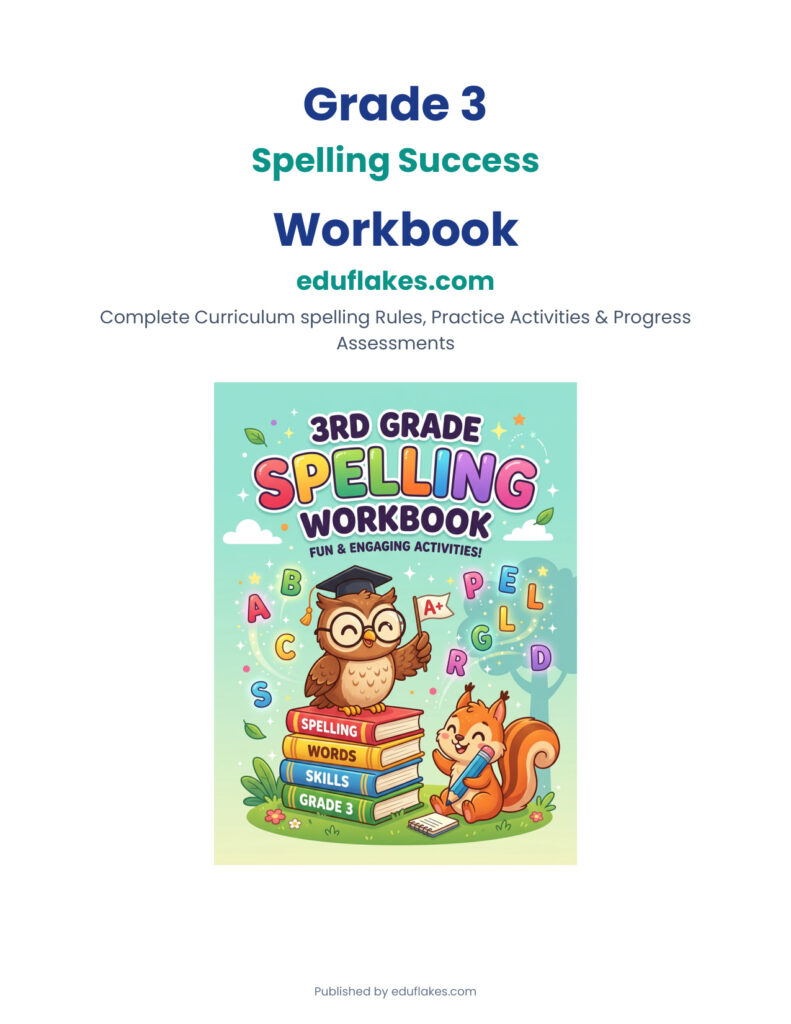
Strong spelling skills are the foundation of confident reading, writing, and communication. As children enter Grade 3, they encounter longer words, more advanced spelling patterns, prefixes, suffixes, homophones, and academic vocabulary. A structured spelling program helps students build these essential literacy skills while improving reading fluency, writing accuracy, and vocabulary development.
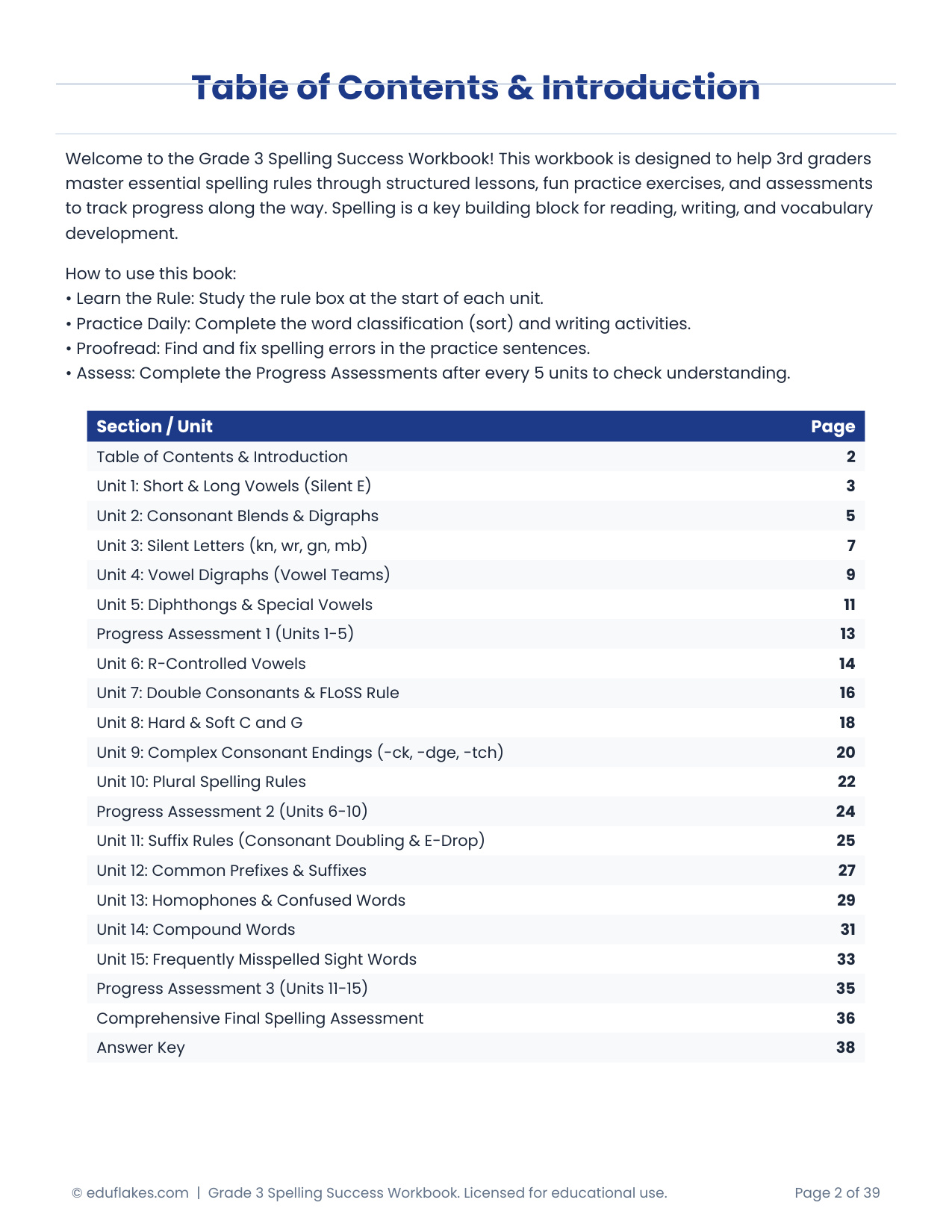
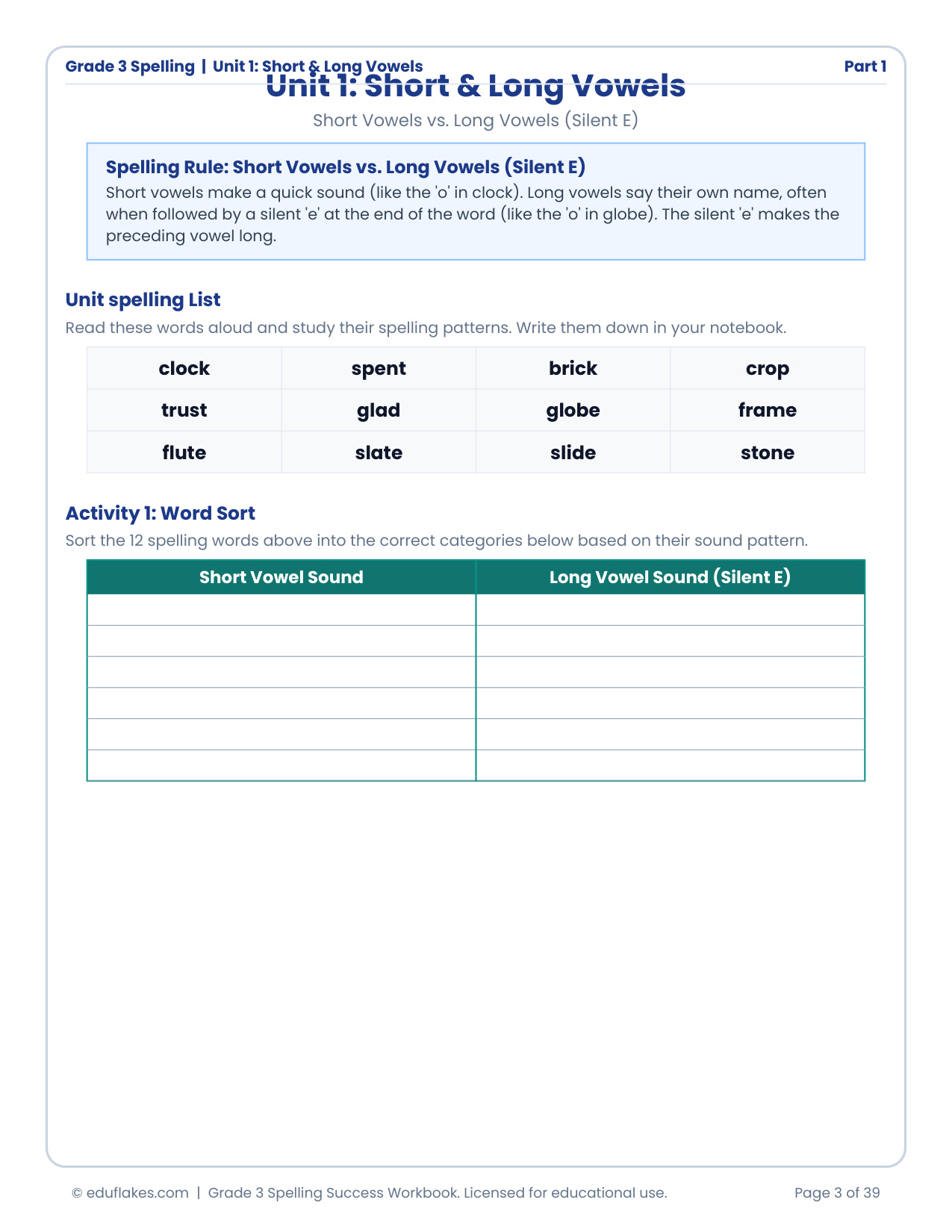
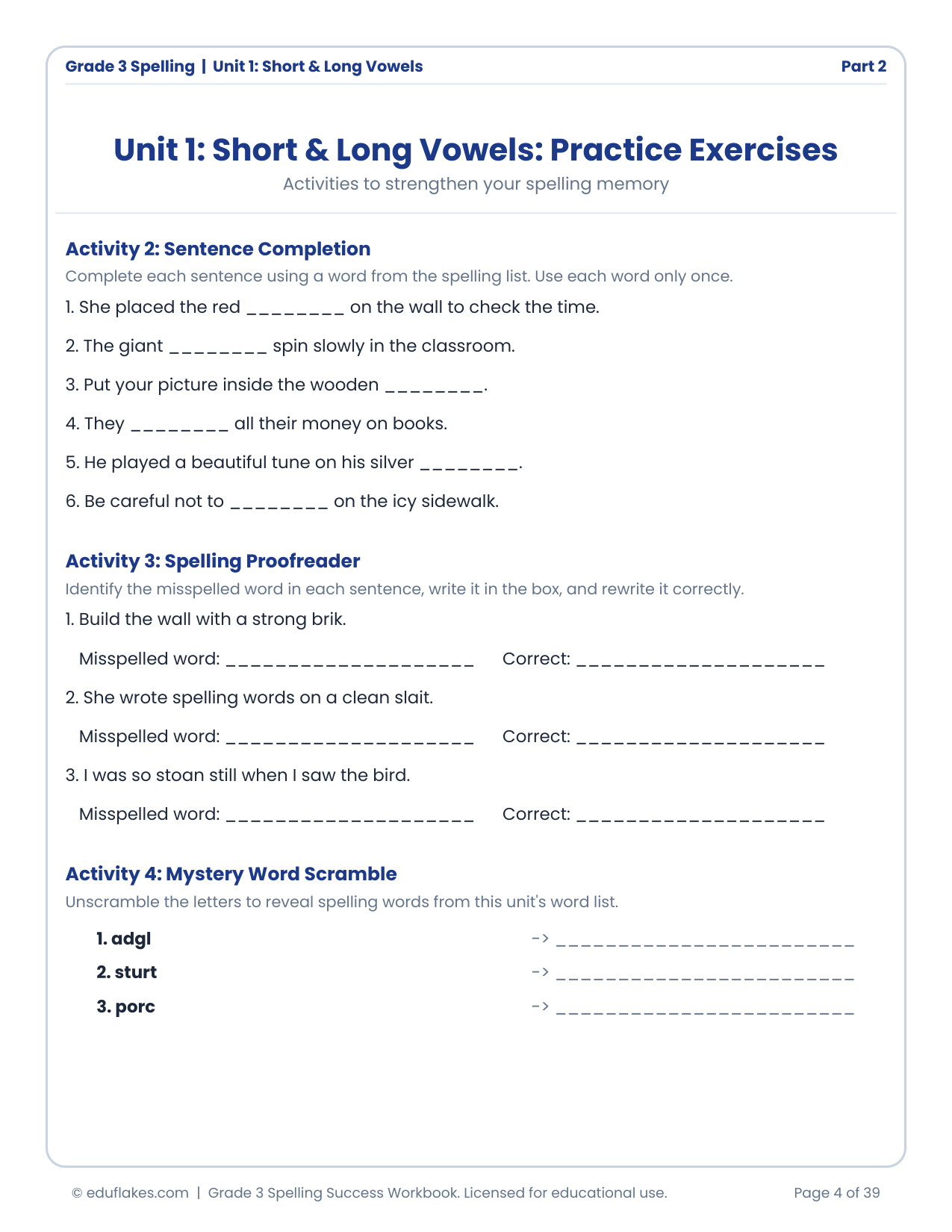
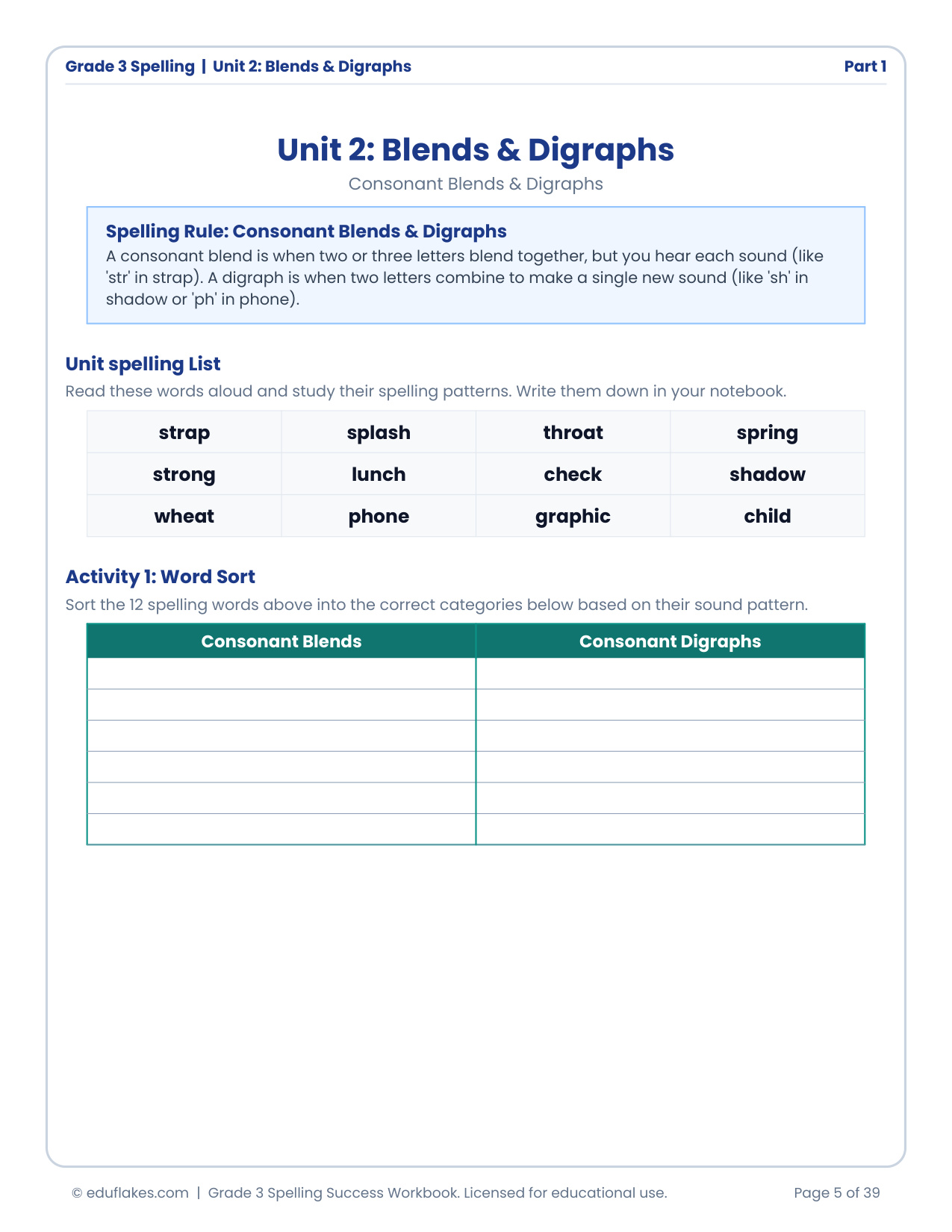
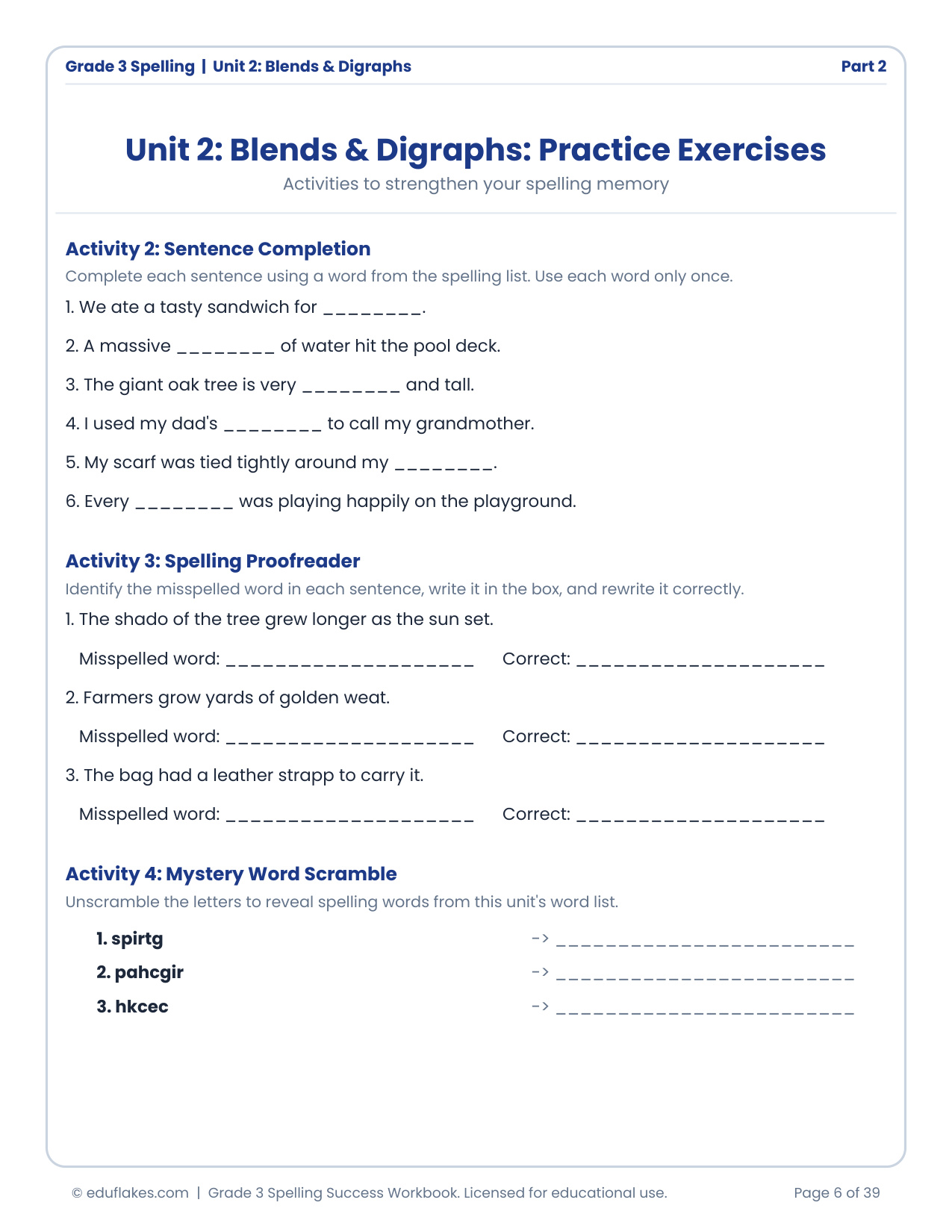
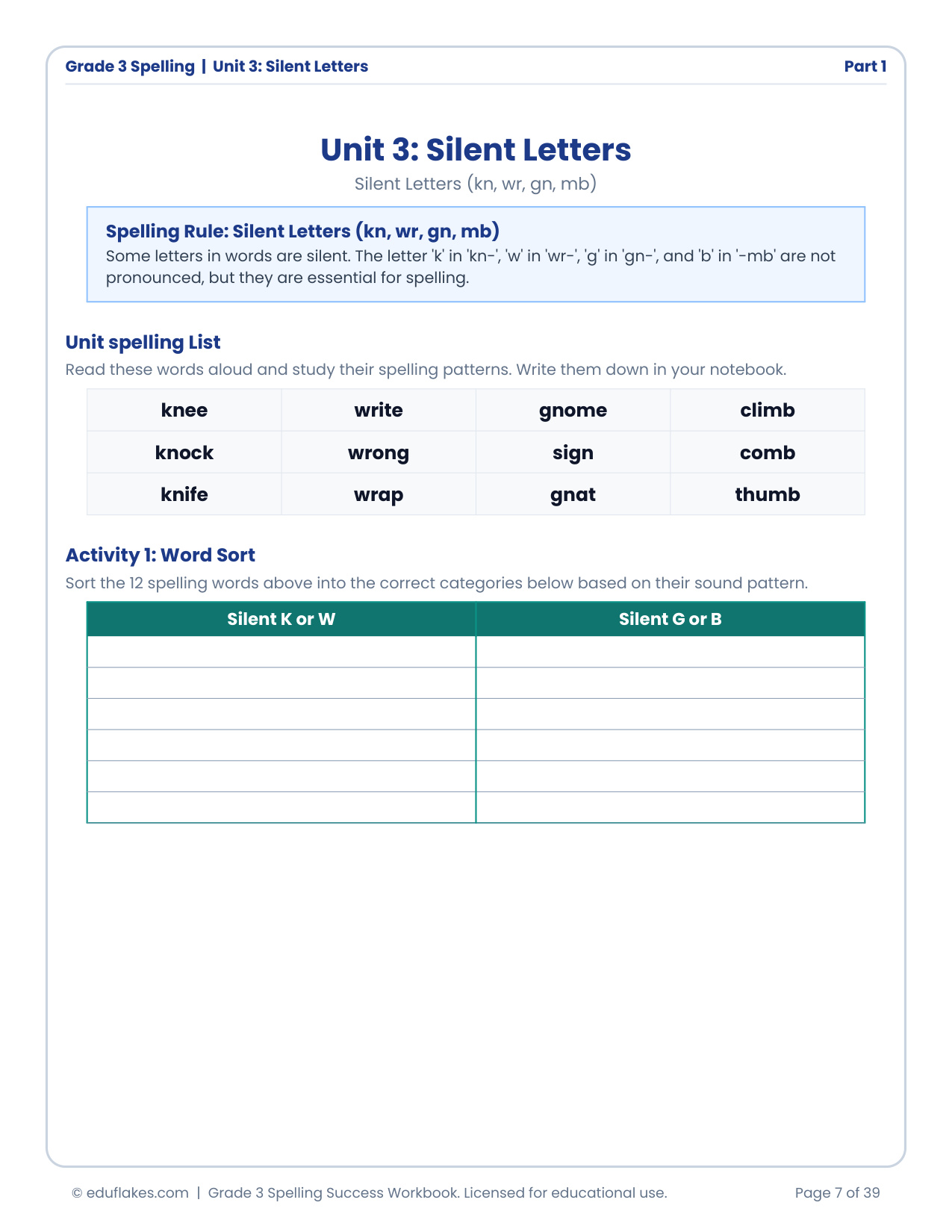
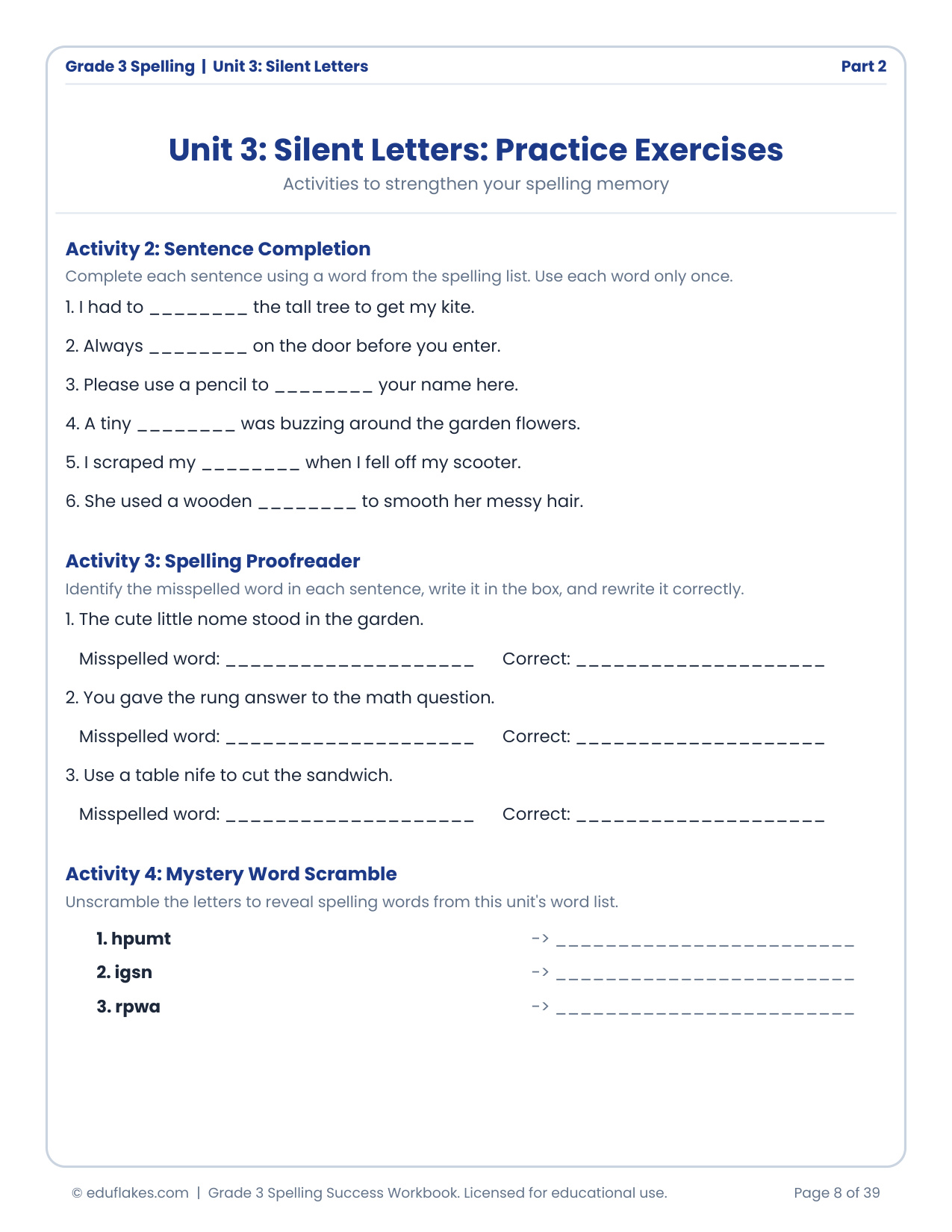
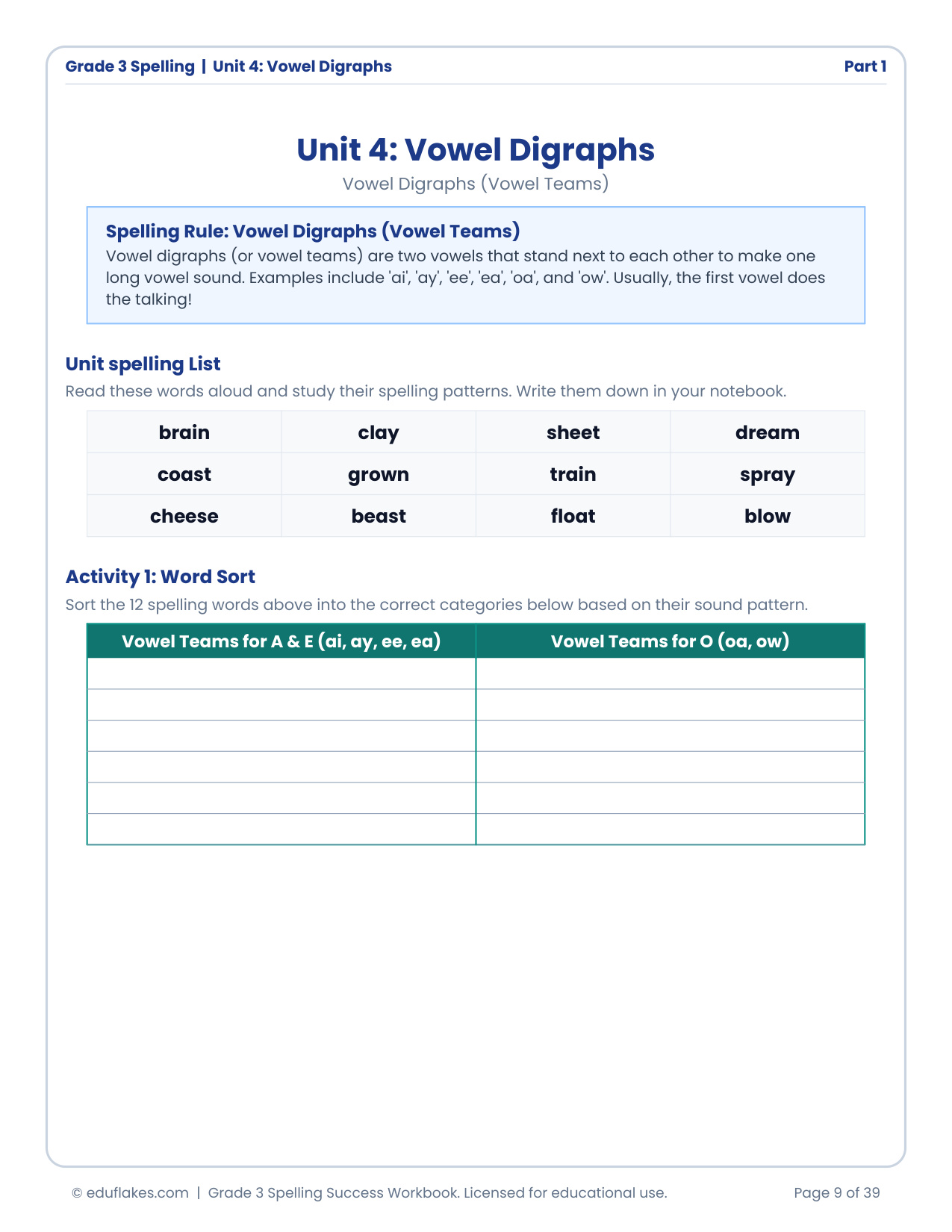
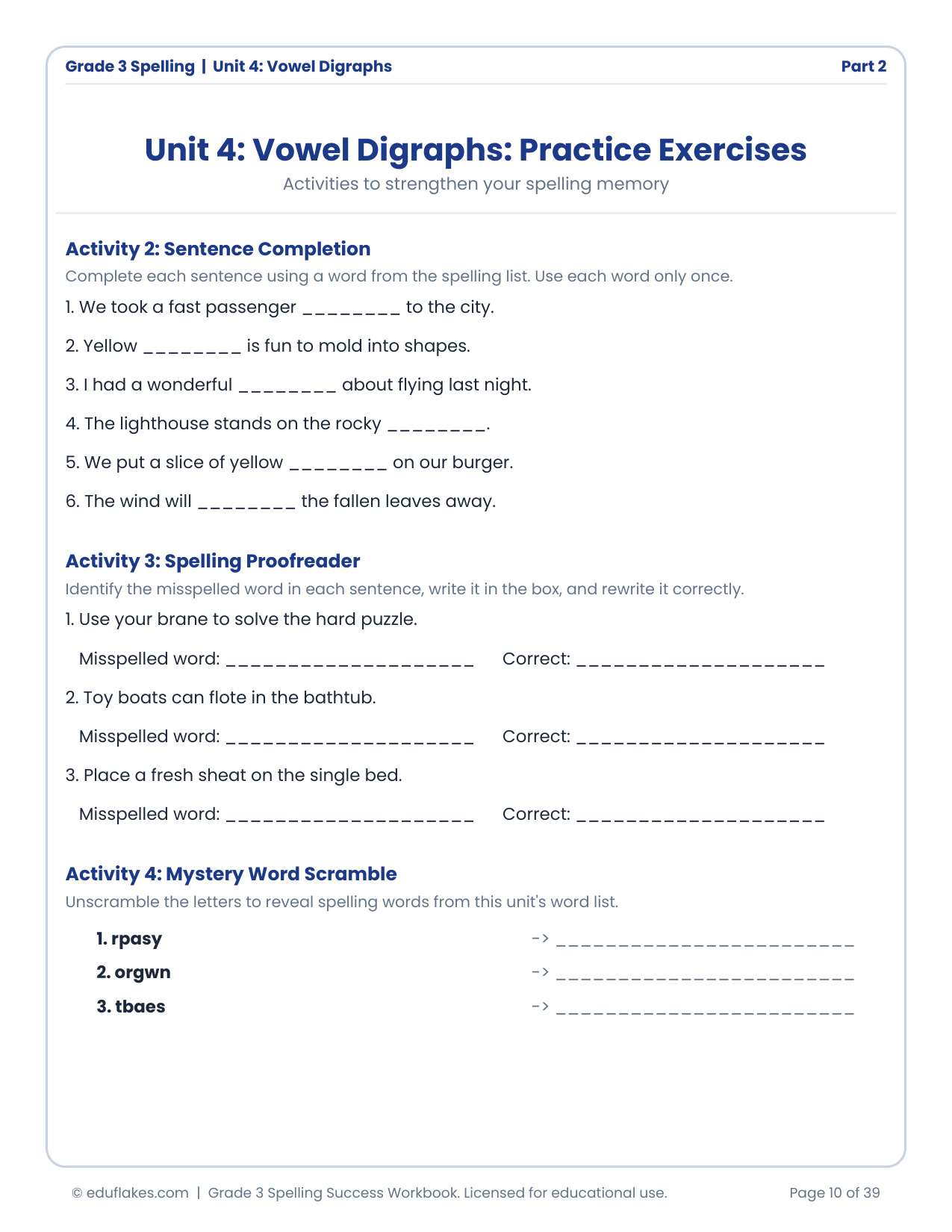
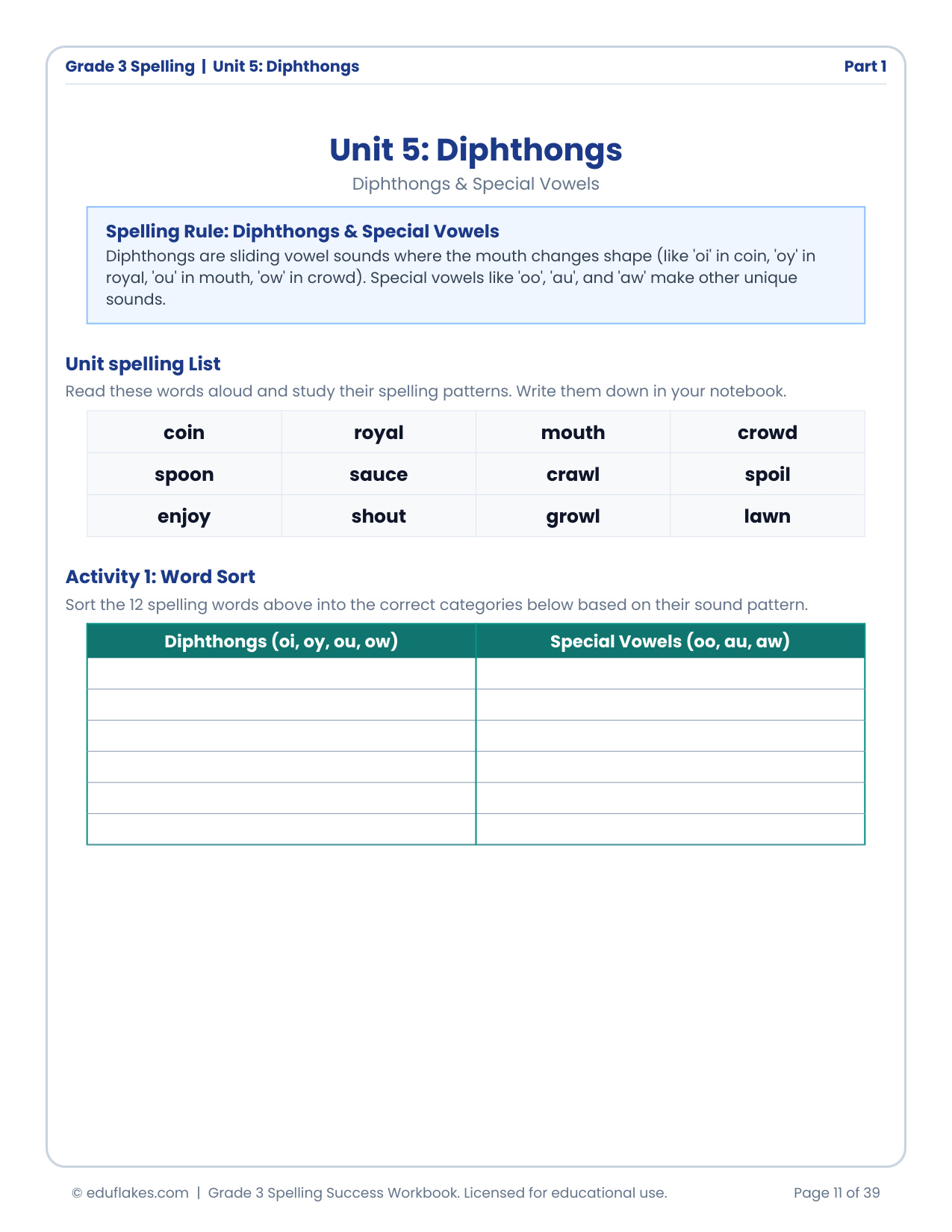
The Grade 3 Spelling Success Workbook by eduflakes.com has been carefully designed to provide systematic instruction through rule-based lessons, engaging practice activities, progress assessments, and a comprehensive final review. The workbook covers fifteen essential spelling units, beginning with short and long vowels and gradually progressing to advanced concepts such as prefixes, suffixes, compound words, homophones, and frequently misspelled challenge words. Each lesson follows a consistent format: students first learn a spelling rule, study a carefully selected word list, complete word sorting activities, practice spelling in context through sentence completion, identify spelling mistakes during proofreading exercises, solve word scrambles, and regularly complete progress assessments.
Whether you are a classroom teacher, homeschool parent, tutor, or intervention specialist, this workbook can become an effective part of your literacy curriculum.
Using the Workbook in the Classroom
Introduce One Rule Each Week
Rather than memorizing unrelated spelling words, students learn why words are spelled a certain way. Every unit begins by explaining a spelling rule before introducing vocabulary that follows that rule.
For example, students first learn about silent-e patterns before practicing words such as globe, frame, stone, and slide. Later units introduce silent letters, vowel teams, r-controlled vowels, plural spelling rules, suffix rules, homophones, and compound words in a logical progression.
Teachers can introduce the weekly rule during a mini-lesson using examples from the workbook before students begin independent practice.
Build Daily Literacy Centers
The workbook naturally fits into literacy stations.
A teacher might organize centers such as:
- Rule Reading Center
- Word Sort Station
- Sentence Writing Center
- Proofreading Practice
- Independent Workbook Time
- Partner Reading Station
Because each unit follows the same structure, students quickly become familiar with expectations and can work independently while the teacher provides guided reading instruction to small groups.
Make Word Sorting Interactive
Word sorting is one of the most effective ways to develop pattern recognition.
Instead of simply copying words, students classify them according to spelling patterns. Throughout the workbook they sort:
- Short vs Long Vowel words
- Consonant Blends vs Digraphs
- Silent Letter patterns
- Vowel Teams
- R-Controlled Vowels
- Double Consonants
- Prefixes vs Suffixes
- Compound Words
- Frequently Misspelled Words
These activities help children notice spelling patterns rather than relying solely on memorization.
Teachers can also print the spelling lists onto cards for small-group sorting games.
Reinforce Learning Through Context
Instead of isolated spelling tests, the workbook requires students to use words within meaningful sentences.
Sentence completion activities encourage children to think about:
- Word meaning
- Grammar
- Vocabulary
- Reading comprehension
This makes spelling instruction much more authentic because students learn when and how to use each word correctly instead of simply memorizing a list.
Improve Editing Skills
One of the strongest features of this workbook is its proofreading practice.
Students search for misspelled words inside complete sentences before rewriting the correct spelling.
This mirrors the editing process used in real writing assignments and teaches students to become independent editors of their own work.
Teachers can further extend this activity by asking students to proofread classmates’ writing using the same techniques.
Weekly Spelling Games
The workbook pairs well with engaging classroom games.
Teachers can use the weekly spelling list for:
- Spelling Bee competitions
- Around the World
- Word Bingo
- Relay Races
- Magnetic Letter Building
- Whiteboard Challenges
- Partner Dictation
- Mystery Word Guessing
Because students already understand the spelling rule, these games reinforce learning while keeping lessons enjoyable.
Using the Workbook for Homeschooling
Homeschool parents often prefer flexible resources that require little preparation. This workbook is ideal because each lesson is already organized into manageable steps.
A simple weekly schedule might look like this:
Monday
- Read the spelling rule
- Review the spelling list
- Complete the word sort
Tuesday
- Practice sentence completion
Wednesday
- Complete proofreading exercises
Thursday
- Solve the mystery word scramble
- Practice writing each spelling word in original sentences
Friday
- Review the week’s words
- Take a spelling quiz or complete the workbook assessment
This routine requires only 15–20 minutes each day while providing consistent spelling instruction.
Connect Spelling With Reading
Whenever your child encounters one of the week’s spelling patterns while reading books, stop briefly and discuss it.
For example:
- “Can you find another silent-e word?”
- “Do you see any vowel teams?”
- “Can you spot a compound word?”
This helps children transfer spelling knowledge from workbook practice into authentic reading experiences.
Connect Spelling With Writing
Encourage children to use the week’s spelling words in:
- Daily journals
- Creative stories
- Personal letters
- Book reports
- Science notebooks
- History summaries
Using spelling words during real writing helps students retain them far longer than memorization alone.
Encourage Self-Correction
The proofreading exercises teach children to identify spelling mistakes independently rather than relying on adults for correction.
Parents can extend this by asking children to reread their own journal entries before submitting them.
Questions like:
- “Can you find any silent-e words?”
- “Did you spell your compound words correctly?”
- “Are there any homophones you should double-check?”
build lifelong editing habits.
Monitor Progress Easily
Unlike many spelling programs that only include weekly tests, this workbook provides progress assessments after every five units and concludes with a comprehensive final assessment. These checkpoints allow teachers and homeschool parents to identify areas where students may need additional review before moving on.
Parents can keep a simple record of assessment scores to monitor improvement throughout the school year.
Support Struggling Readers
Many struggling readers also struggle with spelling because both skills rely on understanding sound-symbol relationships.
This workbook supports intervention by:
- Teaching one spelling rule at a time
- Using carefully selected word lists
- Providing repeated practice
- Reinforcing learning through multiple activity types
- Offering cumulative assessments
Students who need extra support can simply spend additional days on each unit before progressing.
Differentiate for Advanced Learners
Advanced students can easily extend each lesson by:
- Writing paragraphs using every spelling word
- Finding additional words that follow the same rule
- Creating spelling quizzes for siblings
- Building vocabulary notebooks
- Researching word origins
- Playing dictionary challenges
This transforms a single workbook into a much richer language arts experience.
Build Confidence Along the Way
One of the greatest benefits of structured spelling instruction is the confidence it builds.
As students successfully master each spelling rule, they begin recognizing patterns in unfamiliar words, improving both reading fluency and writing accuracy. Rather than guessing at spellings, they apply logical rules to decode and encode words with greater independence.
The consistent lesson format also helps students know exactly what to expect each week, making spelling practice less overwhelming and more enjoyable.
A Complete Grade 3 Spelling Resource
The Grade 3 Spelling Success Workbook is much more than a collection of weekly spelling lists. It is a comprehensive literacy resource that systematically teaches spelling rules, strengthens vocabulary, improves proofreading skills, reinforces reading comprehension, and builds confident writers. With structured lessons, engaging activities, cumulative assessments, and a gradual progression from foundational concepts to more advanced spelling patterns, it provides everything needed for a full year of spelling instruction.
Whether used in a traditional classroom, homeschool environment, tutoring session, literacy intervention program, or after-school enrichment setting, this workbook provides meaningful daily practice that helps Grade 3 students become stronger readers, more accurate writers, and confident lifelong learners.



Related products
-


Free Division worksheets PDF
3rd grade -

